
Stories: Not Too Far From The Ocean
The End of Polio? • I Was a Long-boarder • The Draft: What's Your Problem? • Timothy Leary? • To Ski or Not to Ski • Butch and Sundance • Dogs, Dogs, Dogs! • Arrivals • It's Just a Car • Fish On! • Music Musings • Walter Mitty Redux • Clamming and Crabbing • Grandpop: Can We Talk?
Fish On!
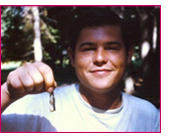
I remember Uncle Reiny (not my real Uncle, but my Dad's friend) teaching me how to tie a #14 gold hook to a leader, put a single salmon egg on it, and attach it to a bobber—my introduction to fishing. Not just fishing but fishing and loving the lakes, rivers, and streams of my California home. Fast forward to my childhood buddy Tommy's family. They were great outdoorsy people and always included me in their summer vacations to the Sierras, where I honed my fishing skills.
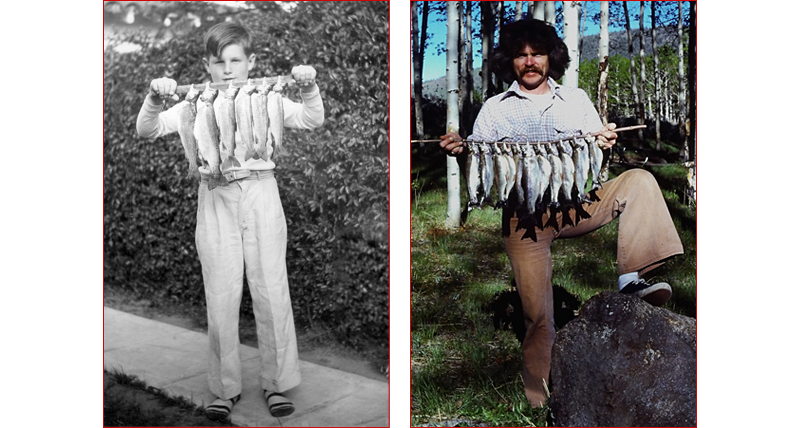
After years of fishing with bait (salmon eggs and night crawlers), I finally discovered lure and fly-fishing. Somehow, this seemed more humane to me as the fish generally didn't swallow the lure or fly, and you could release your catch unharmed—I liked that. I wasn't so good at fly fishing but got into lures as I loved moving up and down a stream, casting into different riffles, and discovering the possibilities. A riffle is where water flows fast around rocks and where trout tend to hang out.
Pit River
My most memorable experience was when a new acquaintance, a major L.A. artist and painter, John White came into my life. John and I had met at a colleague's party and found we had many common interests in art and freshwater fishing. He invited me to join him for a fishing sojourn to the Pit River in Northern California. The Pit is arguably the finest wild trout river in California—with feisty rainbows and challenging river waters.

John was a wealth of fishing knowledge and tuned me up for our adventure by ensuring I had all the proper equipment, reels, waders, and, most importantly, the best lures for the Pit.
We arrived at our accommodations at the Pit in the late afternoon on a brisk October day. John had warned me that there would be much to be desired, as they were run-down cabins, most of which were tilting at 30° toward the river—the toilet as well!
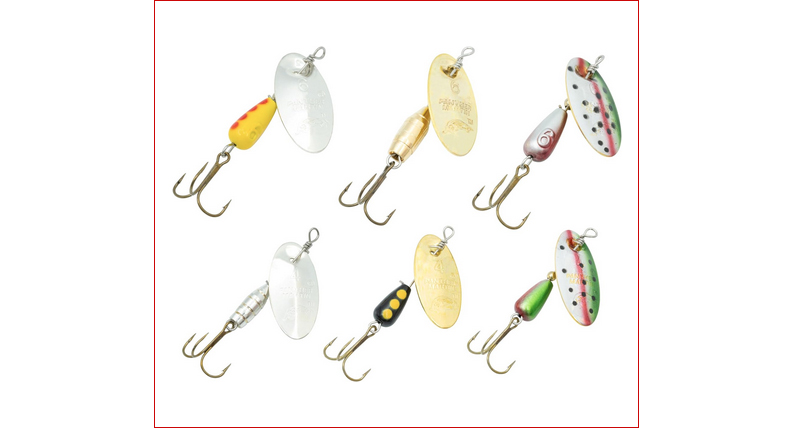
No matter, the sound of the river compelled us, and we both prepped for an evening of fishing. As I descended to the river, my heartbeat and adrenaline pumped as I made my first cast. I cast almost across the river at a riffle behind a large rock using a Panther Martin spinner. The lure hardly hit the water when a large rainbow came out of the water and took my lure. As soon as it disappeared, I realized I had been snagged and had lost all my rigging. I didn't care as this was a one-of-a-kind experience.
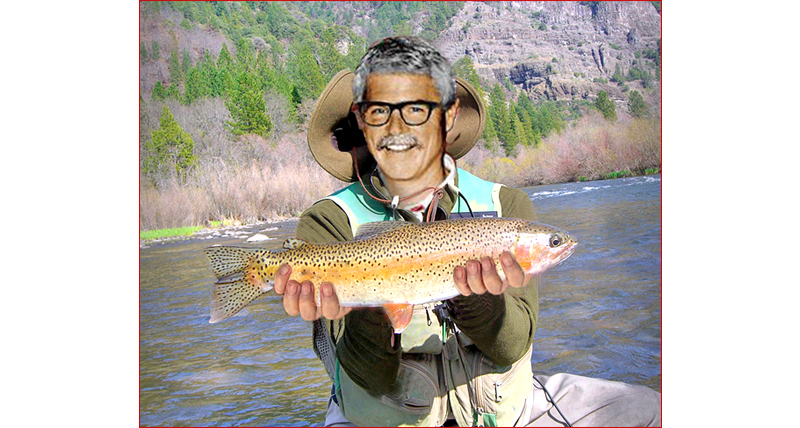
John and I would go our separate ways during the days on the Pit River, and he always caught more trout than I did. However, I would fry up some at night for dinner, knowing he must have enjoyed it. On one of our last days at the Pit, I caught a 20" native rainbow on a Panther Martin spinner. John skunked me on numbers, but I got him with that 20" rainbow—I will never forget that one. Thanks John, for your friendship and advice.
Salt Water—Not My Favorite:
Backing up a few years when I was an undergrad at Cal. State, Northridge, I had a 3D design professor (ceramic artist Tom McMillan) who was also an avid fisherman—the saltwater type. I was not into saltwater fishing much, but he tried to convince me to design a saltwater lure as a design project for his class. That didn't interest me much either, so I decided to work on a foldable beach chair made from cardboard. That sort of worked, and I graduated with honors and went on to UCLA Grad School in Graphic Design.
In the meantime, I worked for Tom at his studio in Torrance off and on in those days as I needed money. One day, he asked me if I would go fishing with him and a colleague from Cal State to the San Juan Seamount for the first Albacore—longfin tuna. The San Juan Seamount is essentially a submerged island and known for an abundance of fish. Never one to reject a fishing adventure, even though it was at sea, I said okay.
Tom had his 25-foot boat moored at Marina Del Rey. I met him and Bill Hardesty, a colleague at Cal State, at the dock around 1:00 a.m. All looked good as we motored out with a full moon and seemingly calm seas to the San Juan Seamount, about 139 miles offshore from the Marina. Tom had strapped a few 55-gallon fuel drums to the starboard and port sides of his small fishing craft since we would probably need extra fuel to get back to the marina the next day.
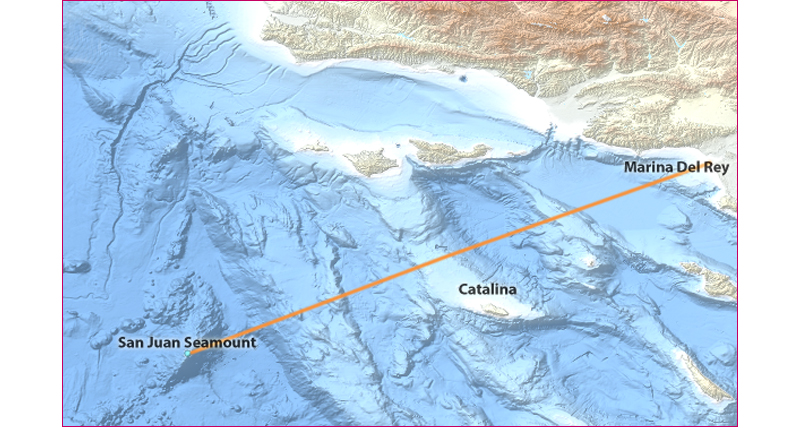
All seemed good motoring out for the next few hours, and we indulged in some Bushmills Irish whiskey, which I brought onboard. We then heard on the radio that strong winds and high seas were predicted for that night and the next day. We didn't overthink it at the time and carried on. Both Tom and Bill went down in the bunks, trying to get some sleep while I was on the flying bridge designated to steer the vessel on a specific heading toward the San Juan Seamount.
It was a beautiful night with a full moon shimmering on the water, and I felt I was about to have another unusual adventure. Unusual, to say the least, as the winds and seas started to pick up big time. I have been in big swells while surfing, but these reminded me of the swells from "The Perfect Storm" movie, as they felt like 30 feet or more. We went almost vertical when the boat got to the swell's peak and went over. The small craft's engine would rev up as it came out of the water, going over the peak and down the backside of the wave.
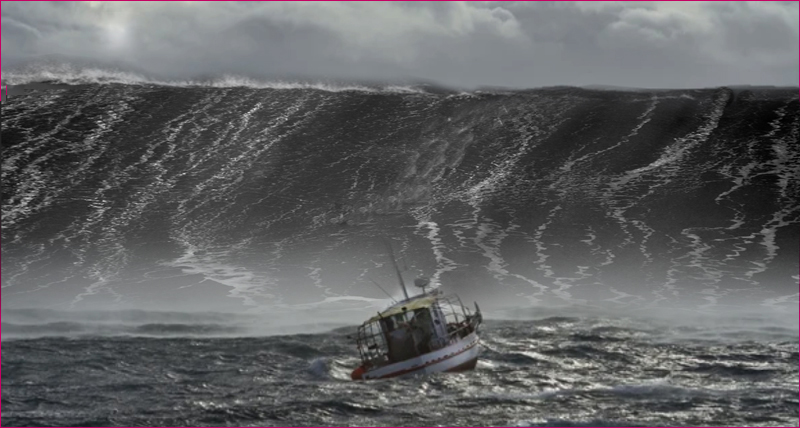
I finally awakened Tom and Bill by pounding my feet on the deck. The 55-gallon fuel drums strapped to the deck were starting to come loose and sliding around the deck in the worsening weather. The heavy, untethered fuel drums sliding around could break through the gunwales of the small boat and cause problems.
Tom and Bill finally got up, and as I was navigating the boat, they stabilized the fuel drums on the deck. I can only imagine what would have happened if they hadn't locked down the fuel drums.
Since we were in serious trouble, Bill, a former Navy radioman, immediately got to the radio and called for a Mayday. Well, as it turned out, the radio could receive but could not transmit—oh great, what the hell did I get myself into now?
We looked at the nautical chart (at least we had one, as this was way before GPS) and decided to make for Catalina Island's leeward side—a course change that would make dealing with the significant winds and swells even more challenging. We nervously motored all night, and, as it started to get light, we noticed a faint hint of land on the horizon—Catalina at last!
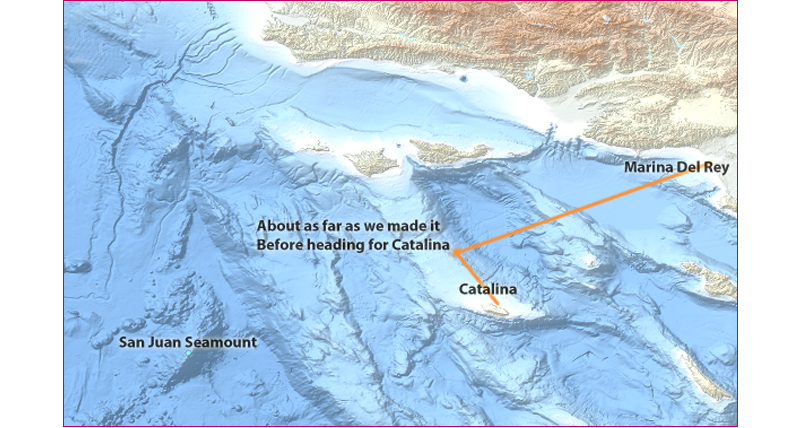
The wind picked up, and the swells went down when we arrived on the leeward side of Catalina Island. We all were exhausted, and Tom dropped a sea anchor so we could rest and reflect. Since we were also hungry, Bill decided to make some breakfast.
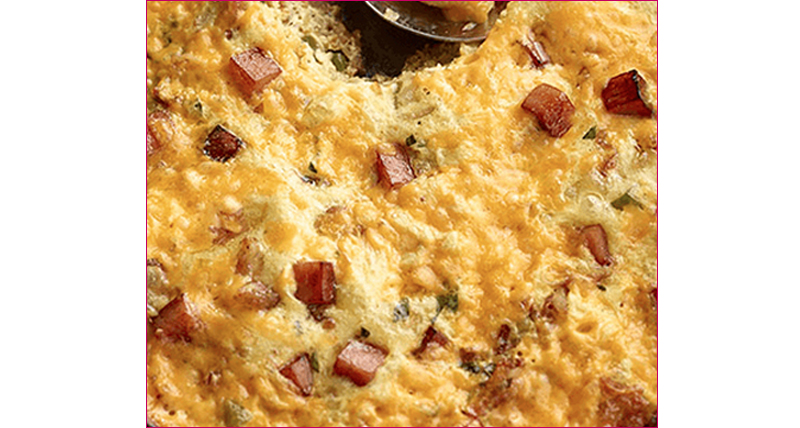
That's where I learned what "Eggs Oh My God" was—something he must have picked up in the Navy. It's a fried mixture of Spam chunks, eggs, and potatoes. Actually, looks digusting but not too bad.
After a rest and breakfast, we decided to fish for sand dabs as the next best thing—not Albacore, but at least fishing for something. I like to eat sand dabs but bottom fishing for them after a harrowing night is not my idea of fishing.
As you might expect, I was pissed at Tom and Bill about all that went down in those 48 hours. We finally picked up anchor and headed back to Marina Del Rey.
Aside from living in Northern California now and doing a bit of crabbing and clamming, that was my last saltwater experience.
